
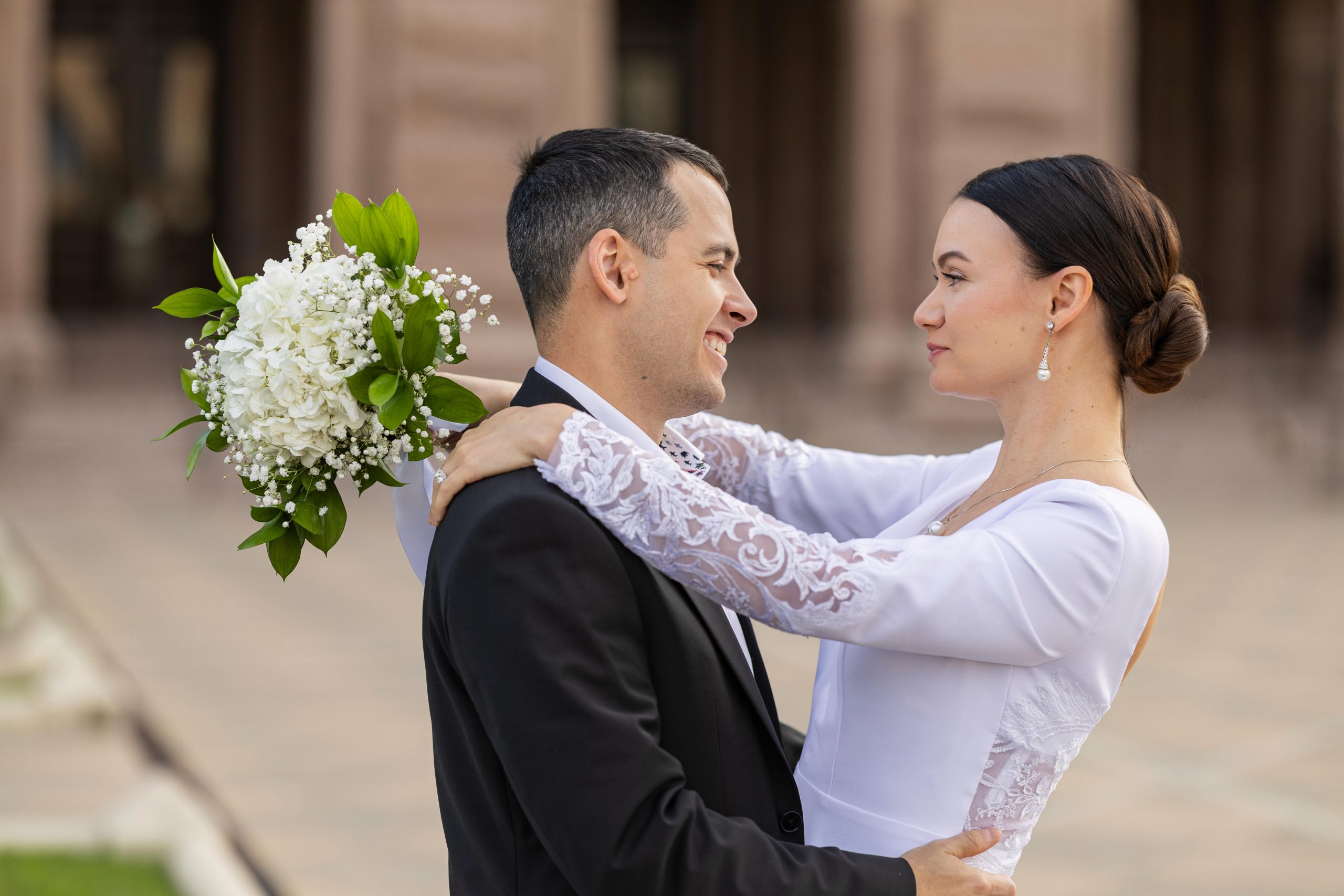
A first look is a private moment when a couple sees each other before the wedding ceremony. It is usually arranged by the photographer in a quiet location away from guests, allowing the couple to experience the moment without an audience.
For some couples, it becomes one of the most emotional parts of the wedding day. For others, waiting until the ceremony feels more meaningful. Neither option is automatically better. The right decision depends on your personalities, traditions, photography priorities, venue, and wedding timeline.
If you are planning a wedding in Austin, a first look can also solve several practical problems. It can create more time for portraits, reduce the pressure of the post-ceremony schedule, and help you avoid taking every formal photograph during cocktail hour. At the same time, it may require starting photography earlier and changing how you imagined your ceremony entrance.
Here is what an Austin wedding first look actually changes and how to decide whether it belongs in your day.
What a First Look Changes About Your Wedding Day
Without a first look, most couple portraits and combined wedding-party photographs happen after the ceremony. Depending on the number of family combinations and the size of the wedding party, this part of the timeline can take a significant portion of cocktail hour.
A first look allows many of these photographs to happen earlier. After the couple sees each other, the photographer can often complete:
- Couple portraits
- Full wedding-party photographs
- Bridesmaids and groomsmen together
- Immediate-family portraits
- Selected extended-family combinations
Some family photographs may still need to wait until after the ceremony, especially if relatives will not arrive early. However, completing even part of the formal portrait list beforehand can make the rest of the day feel less rushed.
This is especially helpful when the ceremony and reception are at the same location. Instead of spending most of cocktail hour taking formal photographs, the couple may have time to greet guests, see the reception space, eat privately, or simply take a short break.
A first look can also create a more controlled emotional moment. During the ceremony, there may be guests watching, music playing, phones in the air, and several important things happening at once. A private first look removes much of that activity. The couple can talk, hug, laugh, or take a few minutes together without needing to immediately continue with the ceremony.
From a photography perspective, privacy matters. When the couple is surrounded by guests, they may become aware of everyone watching and react differently. During a properly planned first look, there is less pressure to perform. The photographer can stay at a respectful distance and document the interaction as it naturally unfolds.
This does not mean the moment must be staged. The photographer may guide one person to stand in a particular place and tell the other where to approach, but the reaction itself should remain genuine. There is no need to recreate the moment or repeat it for the camera.
The Benefits and Tradeoffs of a Wedding First Look
One of the strongest reasons to choose a first look is the timeline. Weddings often run behind because hair and makeup take longer than expected, transportation is delayed, or family members are difficult to gather. Moving portraits before the ceremony creates more flexibility later in the day.
It may also give you more variety in your wedding photographs. When all portraits must happen during cocktail hour, the photographer has to work through the essential combinations quickly. With a first look, there may be more time for movement, candid interactions, individual portraits, and photographs in multiple areas of the venue.
Another benefit is that the couple gets to spend more of the wedding day together. Without a first look, you may spend much of the morning and early afternoon in separate rooms. By the time you see each other, a large part of the photography coverage may already be over. A first look lets you share more of the day instead of meeting only when the ceremony begins.
It can also help with nervousness. Some people feel uncomfortable being the center of attention or become anxious before the ceremony. Seeing their partner privately can make the rest of the day feel calmer. The ceremony is still important, but it no longer carries the pressure of being the first moment together.
However, a first look is not the right choice for everyone.
If you have always imagined seeing each other for the first time at the ceremony, that expectation matters. Some couples value the tradition itself and do not want to change it simply to make the photography schedule easier. Your wedding should not feel like a production created around a shot list.
A first look can also require an earlier start. Everyone involved must be dressed and ready before the first look begins. That means hair, makeup, details, getting-ready photographs, and individual portraits may need to happen earlier than they would with a traditional timeline.
This can be especially relevant for a large wedding party. If several people need professional hair and makeup, moving portraits earlier could add hours to the morning schedule. The additional time gained after the ceremony has to be balanced against the earlier preparation time.
Lighting is another consideration. A midday first look may happen in stronger sunlight than portraits scheduled closer to sunset. An experienced Austin wedding photographer can select a shaded location, use the architecture of the venue, or save some couple portraits for better light later in the day.
Choosing a first look does not mean you must complete every portrait before the ceremony. A balanced plan often works best. The first look and essential group photographs can happen earlier, while a shorter sunset portrait session can be scheduled during the reception. This creates a more relaxed timeline while still taking advantage of Austin’s evening light.
Couples sometimes worry that a first look will make the ceremony entrance less emotional. In reality, these are different experiences. A private meeting before the ceremony does not include the music, guests, wedding attire in motion, or the significance of walking down the aisle. Many couples still have a strong reaction during the ceremony, but no photographer can promise or manufacture a particular emotion.
The decision should not be based on whether you think you are supposed to cry. A quiet smile, laughter, relief, or a long hug can be just as meaningful as a dramatic reaction.
How to Plan a First Look in Austin
A successful first look needs more than a few open minutes in the timeline. The location should be private, visually clean, and easy to reach. If guests can see the area from the parking lot, ceremony entrance, or nearby windows, the moment may quickly become less private than expected.
Your photographer should walk through the venue or review the layout before choosing the location. The best-looking background is not always the best first-look location. Privacy, lighting, walking distance, temperature, and accessibility all matter.
Austin heat is another practical factor, particularly during late spring and summer. A long outdoor first look in direct afternoon sun can affect makeup, clothing, flowers, and everyone’s comfort. A shaded courtyard, covered walkway, indoor room with natural light, or another protected area may be a better option.
The first look itself does not need to take long, but it should not be squeezed into five minutes. The schedule should include time for each person to get into position, remove unnecessary people from the area, photograph the approach, and let the couple experience the moment without being immediately rushed into the next activity.
A useful starting point is to reserve approximately 15 to 20 minutes for the first look, followed by a separate block for couple, wedding-party, and family portraits. The exact amount of time depends on the venue and the number of requested combinations.
It is also important to decide who will be present. Some couples want complete privacy, with only the photographer and videographer nearby. Others invite their parents or wedding party to watch from a distance. Both approaches can work, but everyone should understand the plan in advance.
If you want to exchange private vows, letters, or gifts, the first look can provide a natural opportunity. These moments should receive their own time rather than being added at the last minute. Reading personal vows may take longer than expected, especially when emotions are involved.
If you want to preserve the tradition of not seeing each other before the ceremony but still want a private moment, consider a first touch. The couple can stand on opposite sides of a wall, doorway, or corner and hold hands without seeing each other. You can talk, exchange letters, or pray together while keeping the ceremony reveal intact.
Another option is to schedule first looks with other important people. A bride may have a first look with her father, mother, siblings, or bridesmaids. A groom may do the same with his parents or wedding party. These moments can be meaningful, but adding several reveals requires additional time. They should be selected intentionally rather than included only because they appear on popular wedding checklists.
Ultimately, an Austin wedding first look is useful when it supports the experience you want. It can create a calmer timeline, more portrait opportunities, and a private moment together. It is not a requirement, and it should not replace a tradition that genuinely matters to you.
Before making the decision, talk with your photographer about your ceremony time, venue layout, family portrait list, sunset time, and reception schedule. The full timeline usually makes the answer clearer.
If you are planning a wedding in Austin and want photography that feels natural rather than forced, explore my Austin wedding photography approach. When you are ready to discuss your date, venue, and timeline, you can contact me to start planning your wedding photography.