
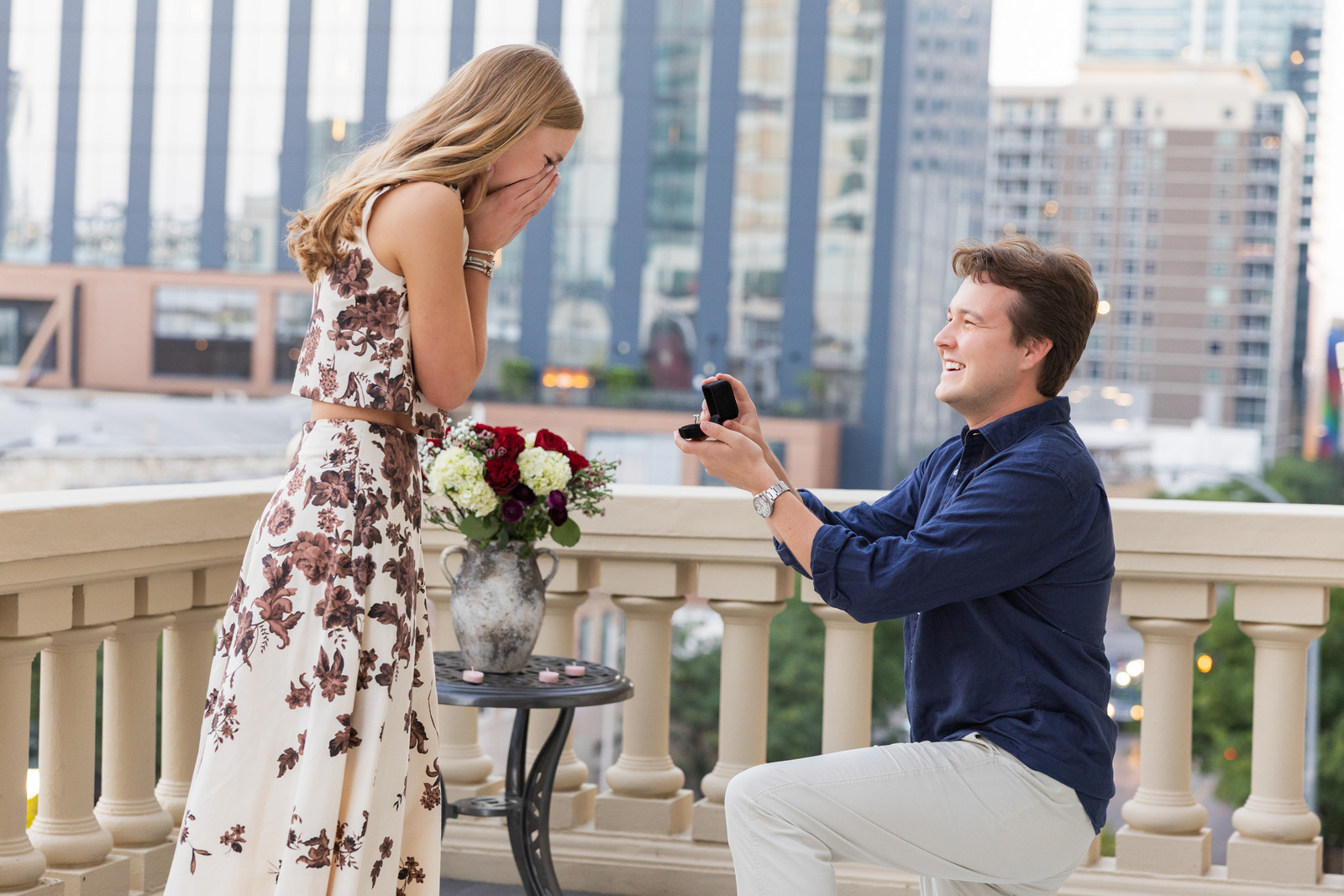
A surprise proposal lasts only a few seconds, but planning it can feel more complicated than organizing an entire photo session. You need the right location, believable timing, a photographer who can remain unnoticed, and a backup plan in case Austin traffic or weather interferes.
The photography itself is only one part of the process. A successful proposal also depends on knowing exactly where to stand, how to approach the location, when to take out the ring, and what will happen immediately afterward. If any of these details are unclear, the photographer may have a blocked view or your partner may notice that something unusual is happening.
Working with an Austin proposal photographer allows you to plan the moment in advance without making it feel staged. The goal is not to turn your proposal into a production. It is to protect the surprise, capture the real reaction, and then give you both a chance to enjoy the moment.
Choosing the Right Austin Proposal Location
The best proposal location is not necessarily the most famous place in Austin. It should fit your relationship and make the plan easy to execute.
Think about places that already mean something to you. It could be the park where you had an early date, a trail you regularly walk together, a favorite part of downtown, or a quiet overlook you discovered during a weekend trip. A personally meaningful location usually creates a stronger story than a place selected only because it looks impressive online.
Privacy is another important consideration. Popular Austin landmarks can become extremely crowded, especially around sunset and on weekends. A beautiful overlook may look empty in promotional photos but feel completely different when dozens of visitors are standing nearby.
This does not mean you need a completely private location. A good photographer can often use angles, distance, and timing to make a public place feel more intimate. However, you should be comfortable with the possibility that other people may be present.
Lighting also affects the location choice. Open areas generally photograph best close to sunrise or sunset, when the light is softer and more flattering. Downtown locations may work at different times because buildings provide shade, but they can also create uneven patches of bright sun and deep shadow.
Austin’s summer heat deserves serious consideration. A long walk to a scenic location may sound romantic during the planning stage but become uncomfortable when the temperature is still above 95 degrees in the evening. If your partner arrives overheated, tired, or frustrated, it can affect the experience. During the hottest months, choosing a location with easy parking and a short walk is often a better decision.
Accessibility matters too. Consider shoes, terrain, stairs, parking, and how naturally you can bring your partner to the exact proposal spot. If the location requires hiking shoes but you expect your partner to dress for dinner, the plan may immediately feel suspicious.
Some Austin parks and venues have photography or event requirements. The City of Austin currently lists photo-permit requirements for posed or commercial photography at locations including Auditorium Shores, Mount Bonnell, Zilker Botanical Garden, and Zilker Metropolitan Park. Mayfield Park has separate rules for proposals and may require a rental rather than a standard photography permit. Because policies can change, confirm the current requirements before finalizing the location through the Austin Parks and Recreation guidelines.
A proposal photographer can help evaluate whether a location works photographically, but the final choice should still feel like you. The strongest plan combines emotional meaning, practical access, appropriate light, and enough space for the photographer to work without being noticed.
How Surprise Proposal Photography Works
Once the location is selected, the photographer needs a precise plan. “We will be near the lake around sunset” is not specific enough. Parks, trails, and overlooks often have several entrances, parking areas, and similar-looking sections.
The plan should include an exact map pin, the direction you will approach from, your estimated arrival time, and the place where you will stop. Reference photos or a short walkthrough video can prevent confusion. If possible, visiting the location before the proposal is extremely helpful.
Your photographer will usually arrive early to check the area and take position. Depending on the location, the photographer may appear to be photographing scenery, waiting for someone, or simply using a phone. The distance needs to be large enough to protect the surprise but close enough to capture expressions clearly.
Identification is essential. Send the photographer a recent photo of both of you and a description of what you expect to wear. Clothing plans can change, so a quick update on the day of the proposal can prevent the photographer from following the wrong couple through a busy park.
You also need a clear signal. This may be a specific place where you stop, a hand movement, or a text sent shortly before you arrive. The best signal is something natural that your partner will not question.
Positioning matters more than many people realize. Ideally, the photographer should be able to see your partner’s face as the proposal happens. If you kneel with your partner facing away from the camera, the photographer may capture your expression but miss the reaction you most wanted to preserve.
Before taking out the ring, pause and confirm that you are standing in the planned spot. Face your partner in the agreed direction, speak for as long as you need, and then get down on one knee. There is no reason to rush. The emotional reaction is usually more important than the exact second the ring appears.
Keep the ring in a secure pocket that is easy to reach. Avoid placing it in a backpack or somewhere that requires several awkward movements. If the box creates an obvious shape in your clothing, a thinner presentation box may be easier to conceal.
Communication on the day should remain simple. The photographer can confirm arrival and readiness through short text messages, but repeated calls or notifications can make your partner suspicious. Turn off message previews if your phone might be visible.
Every surprise proposal also needs a backup plan. Austin weather can change quickly, and traffic can delay either you or the photographer. Decide in advance what will happen if it rains, the location becomes unexpectedly crowded, or you arrive later than planned.
A backup does not always require a second location. It may be as simple as moving to a nearby covered area, waiting ten minutes for a crowd to pass, or shifting the proposal slightly earlier. The important thing is that everyone knows what to do without having a long conversation while the surprise is in progress.
Avoid adding too many people to the planning group. Friends and family can be helpful, but every additional participant creates another opportunity for someone to arrive late, stand in the wrong place, or accidentally reveal the plan. If loved ones will be present, give them clear instructions about where to wait and when they can approach.
What Happens After the Proposal
The photography should not end as soon as your partner says yes.
The first few minutes after the proposal often produce some of the most meaningful photographs. There may be laughter, tears, hugs, another look at the ring, or a phone call to family. These reactions cannot be recreated later, so it is worth allowing the moment to unfold naturally.
The photographer will usually remain at a distance briefly before introducing themselves. This gives you privacy and helps your partner understand what just happened without immediately being directed into poses.
After that, the surprise proposal can transition into a short engagement session. You are already dressed, emotionally present, and in a location selected for photography. It is an ideal opportunity to create a combination of portraits, candid walking photos, close-ups of the ring, and images that show the surrounding Austin scenery.
You do not need posing experience. A photographer can give simple direction while keeping the session relaxed. Most couples need only a few minutes to become comfortable, especially after the pressure of keeping the proposal secret has disappeared.
Consider what you want to do after the photos. A dinner reservation, private celebration, or gathering with family can provide a natural conclusion to the evening. Leave enough time between the proposal and any reservation so you are not checking the clock during the engagement photos.
If friends or relatives are waiting nearby, you can decide whether they should appear immediately after the proposal or meet you later. An immediate celebration creates energetic group photographs, while meeting later gives you more private time together. Neither option is automatically better.
The most important part of Austin proposal photography is preserving the experience without taking control of it. Your photographer should understand the plan, anticipate possible problems, and document the reaction while allowing the proposal to remain personal.
If you are planning a surprise proposal in Austin, contact me with your preferred date, approximate location, and any ideas you already have. I can help you refine the timing, choose a workable camera position, and create a clear plan for capturing the proposal and the engagement portraits that follow.